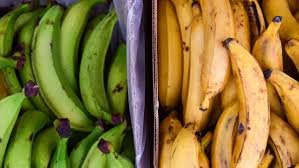
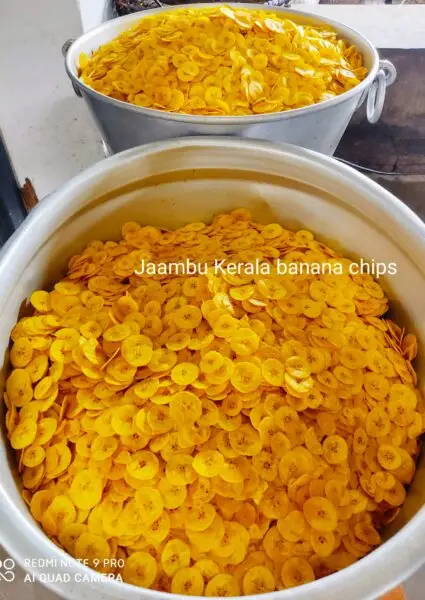
The yellow banana you peel and eat — usually a Cavendish or Robusta — is a dessert banana. It’s soft, sweet and meant to be eaten ripe and raw.
The Nendran is a Kerala-specific cultivar, also called Nenthran or the plantain banana. It’s longer, thicker and firmer, with a tougher rind and a much higher starch content. It’s a cooking banana, used when green for chips and savoury dishes, and ripe for steaming and fritters. Kerala calls it the King of Bananas, and it’s a fixture of Onam and Vishu feasts.
That single difference — dessert fruit versus high-starch cooking banana — is why the chips come out so differently.
Where the Nendran plantain wins
Texture: thin, crisp, and it stays that way
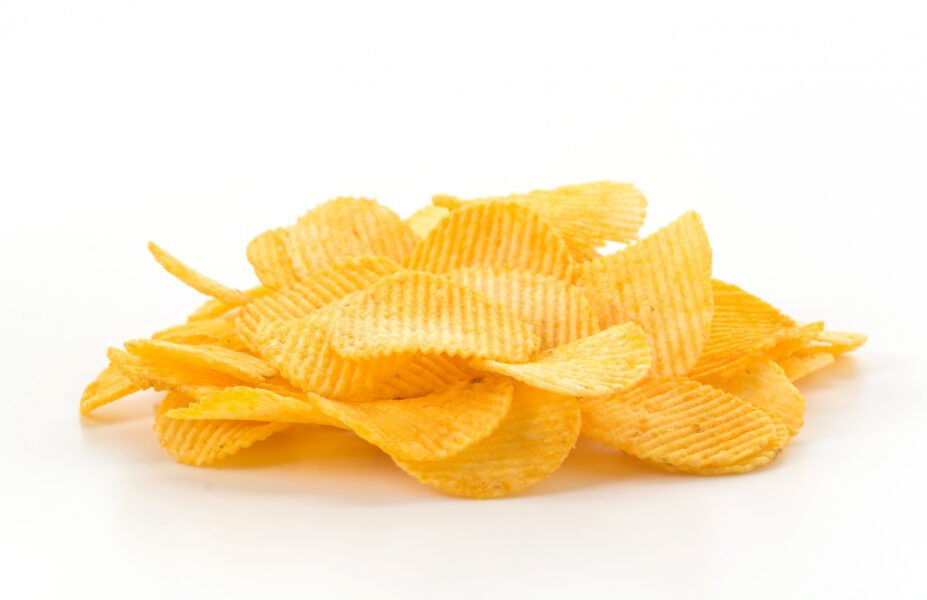
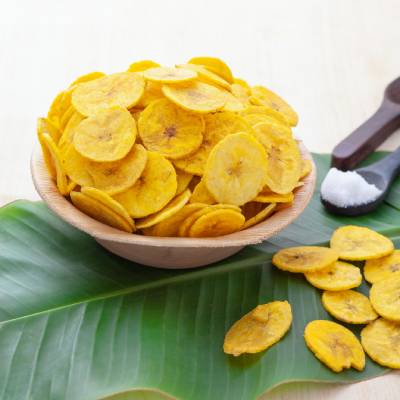
Nendran’s high starch and firm flesh let it be sliced wafer-thin and fried into a chip that snaps cleanly and holds its crunch. A regular sweet banana is too soft and too sugary — it tends to brown fast, go soggy, and absorb more oil. If you’ve ever had a “banana chip” that was chewy or greasy, it was probably the wrong banana (the Cavendish or Robusta commonly found in the rest of India, predominantly in Maharashtra and Gujarat).
Taste: savoury, not sugary
Because the chip is made from a green, starchy banana rather than a ripe sweet one, the flavour is mild and savoury — the kind of thing you eat with tea, not as candy. The classic Kerala chip leans on just salt and the coconut oil it’s fried in. Regular ripe-banana chips taste sweeter and are often coated with sugar or honey to push that further.
Starch and glycemic profile
This is the part most people don’t know. Green Nendran plantain is unusually high in resistant starch — roughly 15–20% when green, versus around 5% in a ripe regular banana. Resistant starch behaves more like fibre than sugar: it resists digestion and feeds gut bacteria. Green Nendran plantain also has a notably lower glycemic index (roughly 30–35) than a ripe regular banana (around 50+). Frying does change the picture — oil adds calories and some nutrients are reduced by heat — but the starting fruit is fundamentally less sugary than a dessert banana.
Nutrient density of the base fruit
Nendran plantain is a source of potassium, vitamin B6, vitamin C and dietary fibre. It’s starchy enough to have been used for generations as a weaning food and porridge for infants in Kerala. None of that makes a fried chip a health food (more on that in our are banana chips healthy guide), but it does mean the raw material (Nendran plantain is better than a generic sweet banana.
Quick comparison
Nendran banana chips
Regular (dessert) banana chips
Banana type
High-starch Kerala cooking banana
Soft, sweet dessert banana (Cavendish/Robusta)
Texture
Thin, crisp, holds crunch
Softer, chewier, more oil-absorbing, stick to teeth.
Taste
Mild, savoury, salt-forward
No match for Nendran plantain
Resistant starch (raw)
~15–20% when green
~5% when ripe
Typical use in Kerala
Chips, savoury dishes, festive feasts
Eaten ripe as fruit
How Jaambu makes the Nendran chip
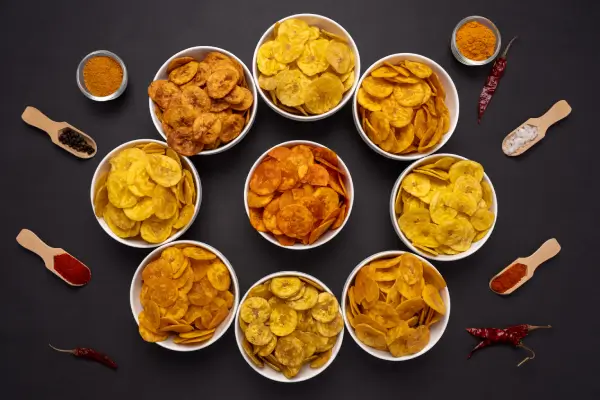
We use Nendran plantain from Kerala farms, fry in pure coconut oil (plain salted only) or sunflower oil (rest of banana chips range) , salt lightly, and cook them in small batches so the crunch is fresh when it reaches you. No artificial flavours, no added preservatives. You can taste it in the plain salted Nendran chips or, if you like a sharper edge, the black pepper version.
FAQ
Is Nendran the same as plantain? It’s a plantain-type cooking banana. In English it’s often called the plantain banana, though in Kerala it has its own identity as the Nendran.
Why are Nendran chips less sweet? They’re made from green, starchy bananas rather than ripe sweet ones, and the traditional recipe uses salt rather than sugar. The sweetness only appears in specific variants like sharkara (jaggery-coated) chips.
Are Nendran banana chips healthier than regular banana chips? The raw fruit is starchier, less sugary and lower-GI than a dessert banana. But any fried chip is still calorie-dense, so it’s best enjoyed as a treat, in moderation.
Can I make Nendran chips at home? Yes — thinly slice green Nendran, soak briefly in salted turmeric water, dry, and fry in oil until pale gold. The hard part is sourcing good Nendran and getting the slice thin and even, which is where a dedicated producer has the edge.