It’s a fair question, and it deserves a straight answer rather than marketing spin. The honest version: banana chips are a treat, not a health food — but not all banana chips are equal, and the difference matters far more than most people realise. It comes down to three things: the banana variety, the oil, and how cleanly they’re made. Here’s what’s actually going on, so you can make your own call. (If you’re really just after the best-quality pack, jump to our best banana chips online guide.)
Banana chips are fried, and frying makes them calorie-dense. A 30 g serving runs to roughly 150 calories, and 100 g can land in the 500+ calorie range — more than the bananas they’re made from, because the fruit absorbs oil during frying and the water cooks off, concentrating everything. So if you sit down with an open pack expecting something as light as fresh fruit, the numbers will surprise you.
That much is true of any banana chip, and it’s worth being portion-aware about. What changes dramatically from one pack to the next is everything else — and that’s where the real question of “healthy or not” actually gets decided.
Here’s where most “banana chips are unhealthy” articles miss the point: they treat every banana chip as the same thing. They’re not, and the difference starts with the banana itself.
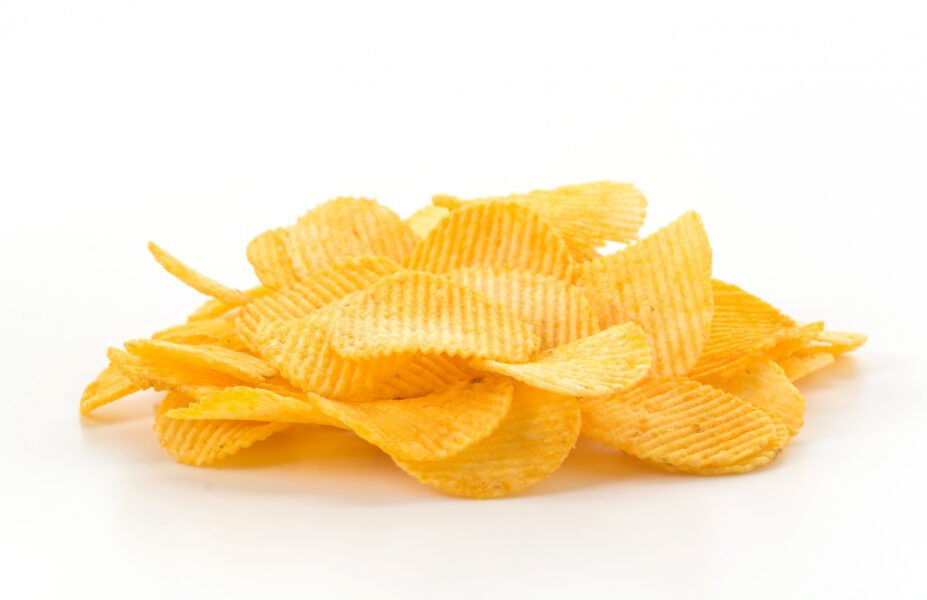
The chips that give the category a bad name are made from ordinary dessert bananas — Robusta or Cavendish — sliced thick. They fry into a dense, starchy chip that turns pasty and sticks to your teeth, and because the maker is competing on price, they’re usually cooked in palm oil, often reused, and too frequently in unregulated, unhygienic kitchens where you have no idea what’s gone into the pan. That’s the real problem with cheap banana chips: a poor banana, a cheap fat, and careless production.
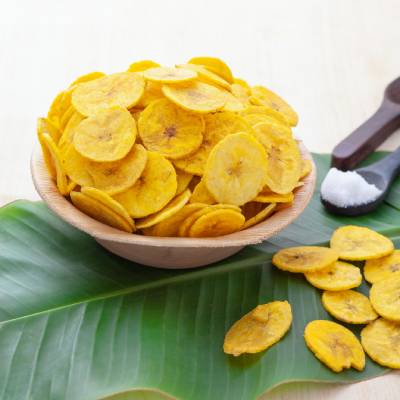
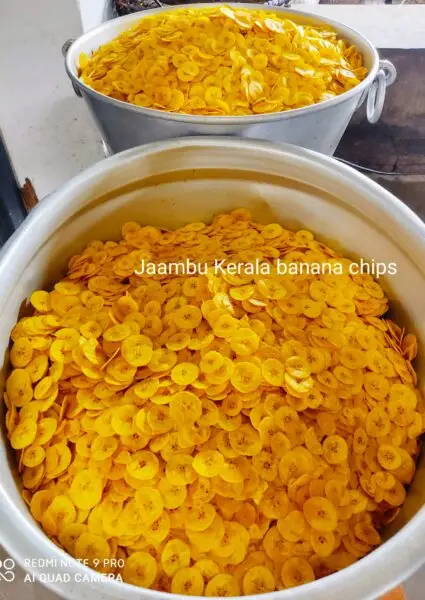
Traditional Kerala chips are a different product entirely. They’re made from green, high-starch Nendran plantains — a firm cooking banana that slices wafer-thin and fries into a light, crisp chip that snaps cleanly instead of cloying up in your mouth. (We unpack exactly why the variety matters in Nendran vs regular banana chips.) Nendran is also less sugary and higher in resistant starch than a ripe dessert banana to begin with, and it carries potassium, vitamin B6 and fibre — though it’s fair to note that frying reduces some of the fibre and heat-sensitive nutrients.
Just as important is what it’s cooked in, and how. A good Kerala chip is never fried in palm oil. Our plain salted Nendran chips are cooked in pure coconut oil — the traditional medium, and what gives that chip its signature aroma. Our black pepper chips are cooked in sunflower oil, which is lighter and lower in saturated fat. Different oils, same principle: a clean, single-use cooking medium in a proper facility — not the reused palm oil of a cut-price operation.
A quick, honest word on the oils themselves: coconut oil is stable and traditional but high in saturated fat, so a coconut-oil chip stays calorie-dense; sunflower oil is lighter on saturated fat. Neither makes a fried chip a “light” food — but both are a world away from cheap, reused palm oil.
Not all banana chips are made the same way. If you care about what you’re eating, check for:
- The Nendran variety — a thin, crisp chip rather than a thick, teeth-sticking one made from Robusta or Cavendish.
- No palm oil — a clean frying medium like coconut or sunflower, not reused palm oil.
- Clean, regulated production — made in a proper facility, not an anonymous kitchen where hygiene is anyone’s guess.
- A short ingredient list — banana, oil, salt. No artificial flavours, no preservatives.
- Freshness — fresher chips taste better and you’ll be satisfied with less.
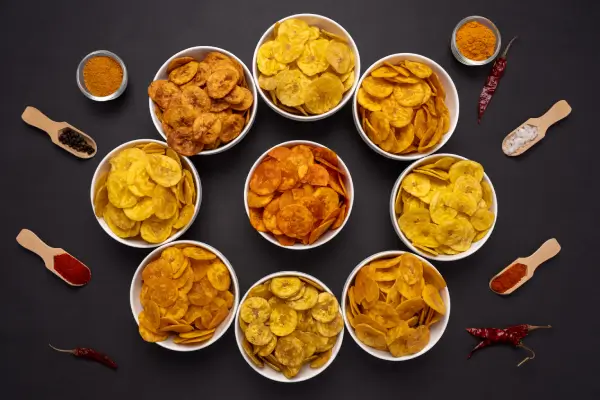
That’s the standard we hold ourselves to across our banana chips range: Nendran, never fried in palm oil — plain salted in pure coconut oil, flavoured chips in sunflower — lightly salted, no artificial flavours, no added preservatives, made in small batches in Kochi. (More on our method on the About Us page.)
You don’t have to choose between “never” and “the whole pack.” A reasonable middle:
- Treat a handful (about 30 g) as a serving rather than grazing from an open bag.
- Pair them with something that adds protein or fibre — a cup of tea is tradition, but alongside nuts or yoghurt makes a more balanced snack.
- Enjoy them as the deliberate treat they are — tea-time, a festival table, a small pleasure — rather than an all-day default.
Eaten this way, a clean chip made from the right banana in a clean oil is a perfectly reasonable part of a balanced diet. Prefer a fruit chip with a bit more fibre? Our jackfruit chips are worth a look — here’s the nutrition case.
Are banana chips healthier than potato chips? Made cleanly — from Nendran, in a clean oil, in a proper facility — they compare favourably and carry some potassium and fibre from the fruit. But both are fried, calorie-dense snacks best eaten in moderation. See our best banana chips guide for how to judge quality.
What’s the difference between Nendran and ordinary banana chips? Nendran is a firm, high-starch Kerala cooking plantain that cooks into a thin, crisp wafer. Ordinary dessert bananas like Robusta and Cavendish make thick, dense chips that stick to the teeth and are more often fried in cheap palm oil. The variety and the oil are the biggest quality tells.
What oil are Jaambu banana chips cooked in? Our plain salted chips are cooked in pure coconut oil; our flavoured banana chips are cooked in sunflower oil. Neither is made in palm oil.
Can I eat banana chips on a diet? In controlled portions, yes. Stick to a small serving, choose a clean Nendran chip cooked in a high quality oil, and account for the calories. They’re a treat to fit into your day, not a free food.
This article is general information, not personalised dietary advice. If you have specific health goals or conditions, please check with a qualified dietitian or doctor.
Prefer a clean chip made from the right banana? Try Jaambu’s plain salted Nendran chips — made in pure coconut oil in Kochi — or browse the full shop.