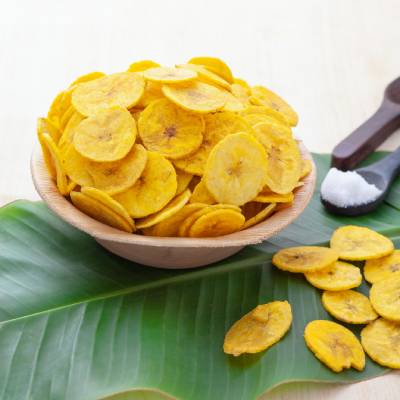
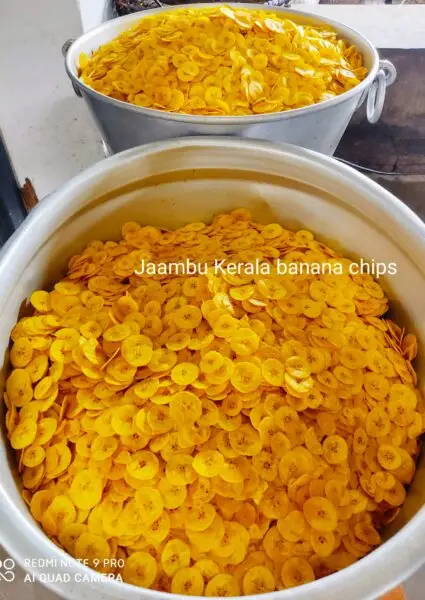
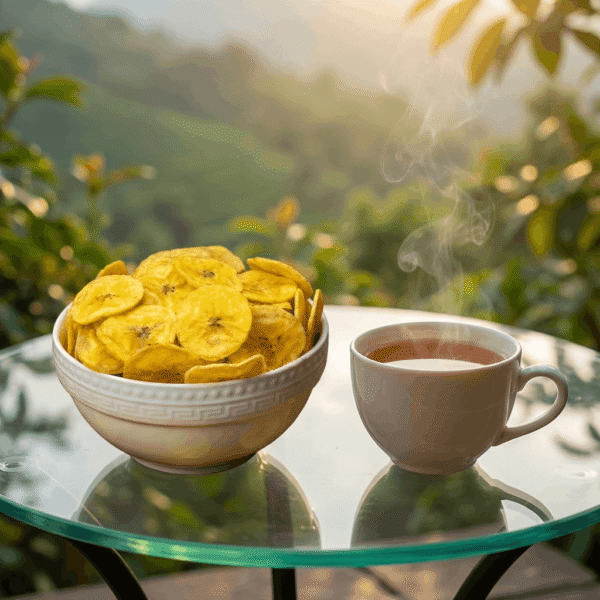
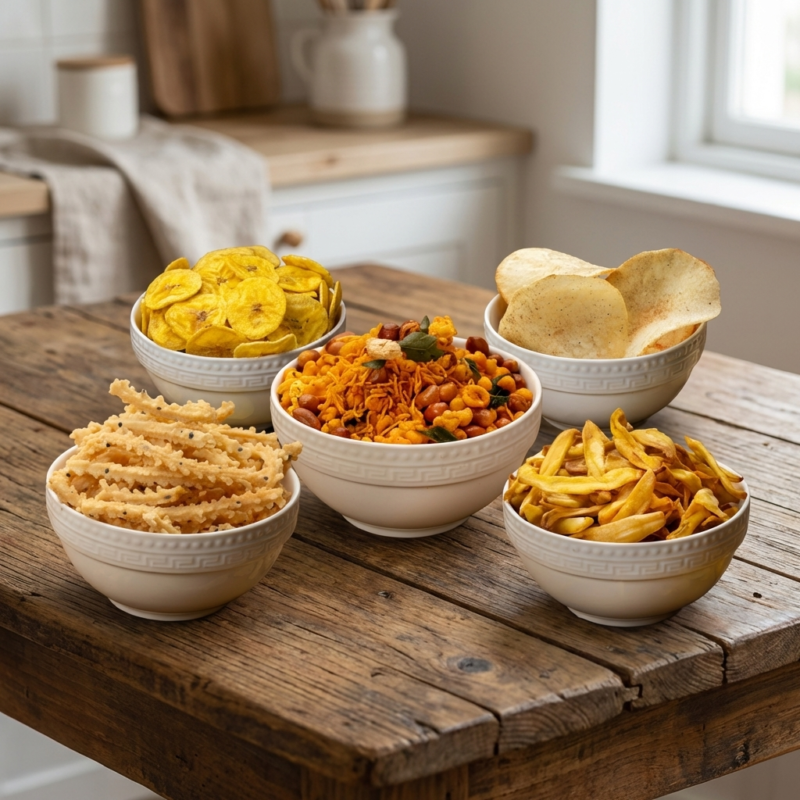
If you have ever walked through the bustling markets of Kerala or stood on a railway platform as the Parshuram Express pulled in, you have encountered the unmistakable aroma of fresh coconut oil meeting raw Nendran plantains. It is a scent that defines a region. The Kerala Nendran banana chip, known locally as Kaya Varuthathu or Upperi, is more than just a snack—it is a piece of living history.
1. The Roots: The Rise of the Nendran Plantain
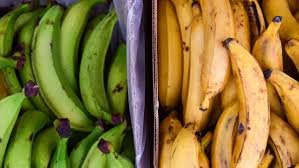
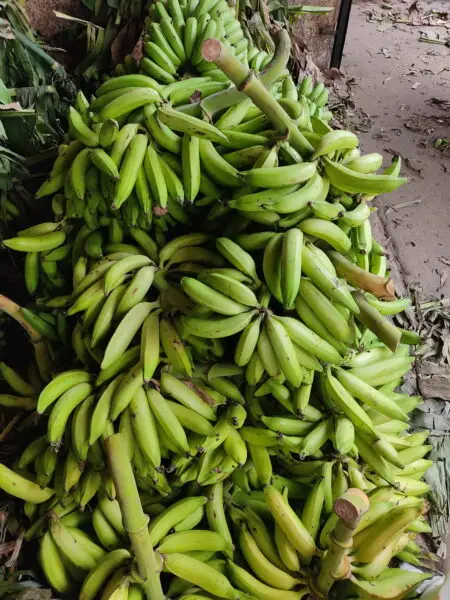
While bananas are grown across the globe, the soul of the Kerala banana chip lies in a specific variety: the Nendran (Plantain). Unlike the sweet, soft Cavendish bananas found in global supermarkets, the Nendran is firm, starchy, and possesses a subtle tang. Click here to read more about the difference between a banana and plantain.
Historians believe the banana was domesticated in Southeast Asia over 7,000 years ago, reaching the Indian subcontinent by 2,000 BCE. In the fertile, rain-drenched soil of the Malabar Coast, the Nendran plantain found its perfect home. The Nendran variety of plantain is unique to the border areas of Kerala and Tamil Nadu and do not grow anywhere else in the world. For centuries, these plantains were a staple of the Keralite diet, but their short shelf life in a humid tropical climate necessitated a stroke of culinary genius: preservation through frying.
2. The Science of the Sizzle: Traditional Craftsmanship
The traditional method of making Upperi is a masterclass in elemental cooking. It begins with “raw” or unripe green bananas.
- The Turmeric Bath: Once peeled, the bananas are often soaked in water infused with turmeric. This isn’t just for the iconic golden hue; turmeric acts as a mild natural preservative and an anti-microbial agent.
- The Direct Slice: Traditional makers don’t slice into a bowl. They use a large, hand-held mandolin directly over a massive cast-iron kadai filled with bubbling, pure coconut oil. This “direct-to-fire” method ensures that the starch in the plantain doesn’t oxidize, keeping the chips incredibly crisp.
- The Salt Water “Snap”: Perhaps the most dramatic part of the process is adding salt. Instead of dusting the chips afterward with salt, the cook sprinkles a concentrated salt-water solution directly into the boiling oil. The resulting hiss and steam are the sounds of the salt being infused into every fiber of the chip.
3. Cultural Soul: From Temples to the Sadhya
The Kerala banana chip is inextricably linked to Onam, the state’s harvest festival. In the grand Onam Sadhya (the traditional multi-course feast served on a banana leaf), the Upperi holds a place of honor. It is strictly placed on the bottom left corner of the leaf, alongside its sweet sibling, Sarkara Upperi (jaggery-coated banana chunks).
For the Malayali diaspora, these chips are the ultimate “taste of home.” Historically, before the age of e-commerce, a visitor returning from Kerala was expected to carry a large, translucent packet of chips, tied with a simple string—a golden currency of affection shared among friends and family.
4. The Commercial Revolution: From Roadside to Retail
The journey from a local delicacy to a global FMCG (Fast-Moving Consumer Goods) powerhouse began in the late 20th century. As Kerala’s tourism bloomed, “Hot Chips” stalls became a staple of the landscape. These glass-fronted shops, where you could watch the frying process live, became the first “brand ambassadors” for the snack.
In the last decade, the industry has undergone a radical transformation:
- Standardization: What was once a variable street food is now produced with scientific precision. Brands like Jaambu now focus on the “microns” of thickness to ensure a consistent crunch.
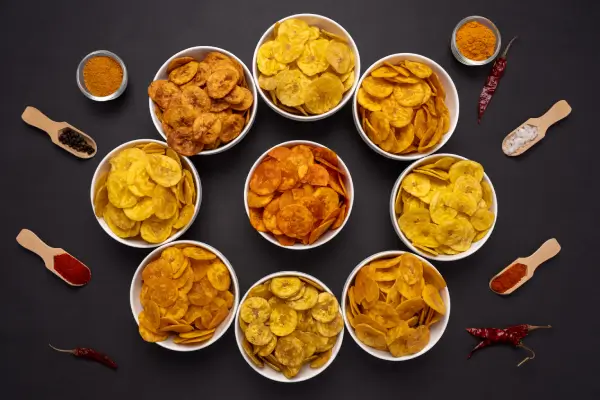
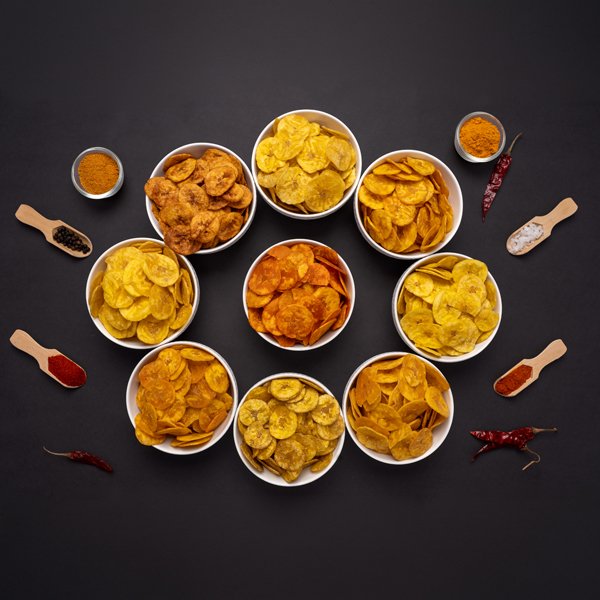
- Flavor Evolution: While the classic salted chip remains the king, the modern market has embraced diversity. From Peri-Peri and Sour Cream to Black Pepper and even Cream and Onion flavoured variants, the humble chip has become a canvas for global flavors.
5. Why the World is Obsessed
Why has the Kerala banana chip succeeded where other regional snacks have remained local?
- The Texture: The Nendran’s high starch content gives it a “snap” that potato chips can rarely match.
- Clean Label: In its purest form, it contains only three or four ingredients: Banana, Coconut Oil, Salt, and in flavoured versions, the natural extract based flavouring. This appeals to the modern consumer’s desire for “clean” and recognizable ingredients.
- The Coconut Factor: The use of coconut oil provides a unique medium-chain triglyceride (MCT) profile and a distinct aroma that differentiates it from the generic vegetable-oil-fried snacks found globally. Click here to order the uniquely wonderful Jaambu Kerala Nendran banana chips, Plain Salted, in Coconut Oil.
6. The Future: Jaambu As A Global Snack Giant
Today, Kerala banana chips are no longer just a South Indian secret. They are sold in the aisles of supermarkets in Dubai, London, New York, Pune, and Mumbai. The story of the banana chip is a story of Kerala itself: deeply rooted in tradition, yet adaptable, resilient, and globally ambitious.
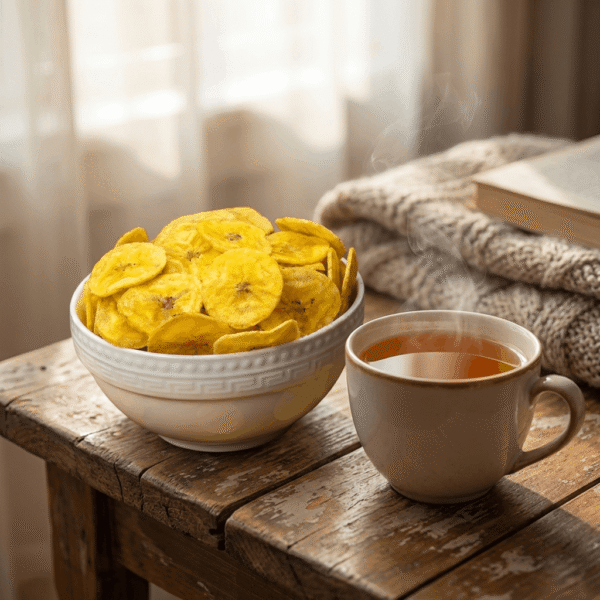
As we move toward a future of sustainable and conscious snacking, the humble Kaya Varuthathu stands as a testament to the power of simple ingredients. Whether you are enjoying them with a hot cup of Chai on a rainy afternoon or serving them at a high-end party, you are participating in a culinary tradition that was thousands of years in the making.