From Grove to Golden Crunch: The Art of Making Kerala Banana Chips
If you’ve ever opened a fresh packet of Kerala banana (plantain) chips in coconut oil, you know that distinct aroma—a heady mix of sweet Nendran bananas and earthy coconut oil. But have you ever wondered how a green, starchy fruit transforms into that legendary, glass-like snap?
The process is a masterclass in traditional food science, requiring precision, timing, and a very specific set of ingredients. Here is the journey of the authentic Kerala banana chip.
1. Sourcing the “King of Bananas (plantains)”
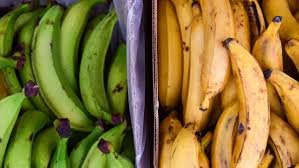
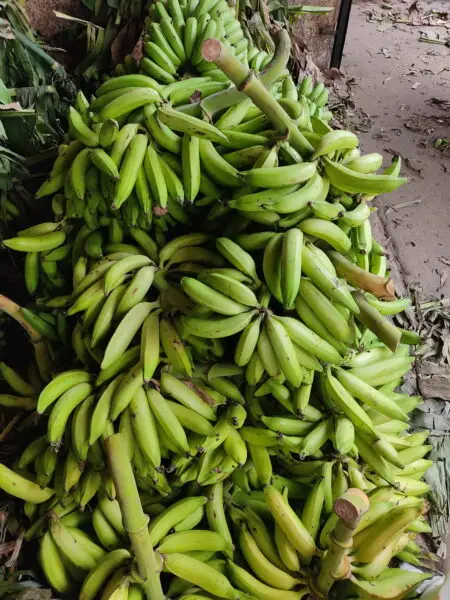
The process begins in the lush plantations of Kerala. Unlike the common table banana, Kerala banana (plantain) chips require the Nendran variety. These are harvested while still unripe and green. At this stage, the banana is high in starch and low in sugar, which is critical; if the banana were ripe, the sugars would burn in the oil, resulting in a soggy, brown chip instead of a golden, crispy one.
2. The Art of Peeling
Peeling a raw Nendran plantain is not like peeling a regular banana. The skin is thick and contains a sticky sap. Traditional peelers often soak the bananas in water or lightly coat their hands in oil to manage the sap. The ends are trimmed, and a shallow longitudinal slit is made to strip away the heavy green jacket, revealing the firm, creamy-white core.
3. Slicing Directly Into the Kadhai (Cheenachatti)
This is where the magic happens. In authentic production, the bananas (plantains) are rarely sliced onto a plate first. Instead, a large, circular slicer (automatic slicer in Jaambu’s case) is held directly over a massive cast-iron kadhai (called Cheenachatti) filled with boiling oil.
By slicing directly into the heat, each chip is sealed instantly. This prevents the slices from sticking together and ensures the uniform “snap” that defines a high-quality chip.
4. The Golden Bath: Pure Coconut or Sunflower Oil
This is the non-negotiable step. While commercial brands often use palm oil to cut costs, Jaambu chips are cooked in 100% pure coconut or sunflower oil.
- High Smoke Point: It handles the high heat required for deep frying.
- Flavor Infusion: The oil imparts a nutty, tropical richness that complements the natural taste of the Nendran.
5. The Turmeric-Salt Seasoning
As the chips sizzle, a “magic solution” is added to the boiling oil. A mixture of water, sea salt, and turmeric powder is carefully drizzled in.
- The Turmeric: Gives the chips their iconic vibrant yellow hue and acts as a natural antioxidant.
- The Salt: Since the water evaporates instantly in the hot oil, the salt is evenly infused into every pore of the chip.
6. Monitoring the “Sound of the Sizzle”
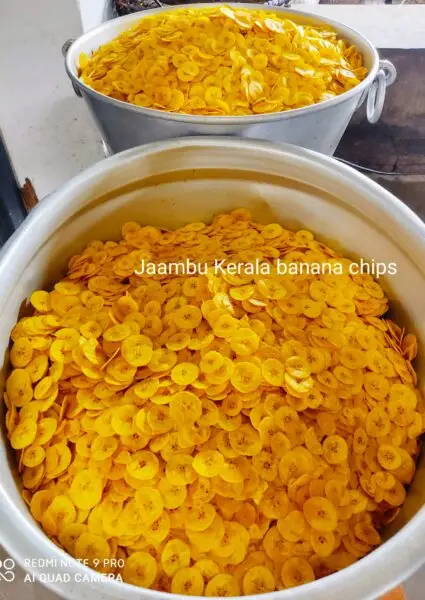
Jaambu’s master chip-makers don’t use timers; they use their ears. When the chips first enter the oil, the bubbling is loud and vigorous. As the moisture leaves the banana, the bubbling slows down, and the chips begin to make a distinct “clinking” sound against the slotted spoon. Once they reach a perfect, rigid consistency, they are quickly skimmed out.
7. Cooling and Packing
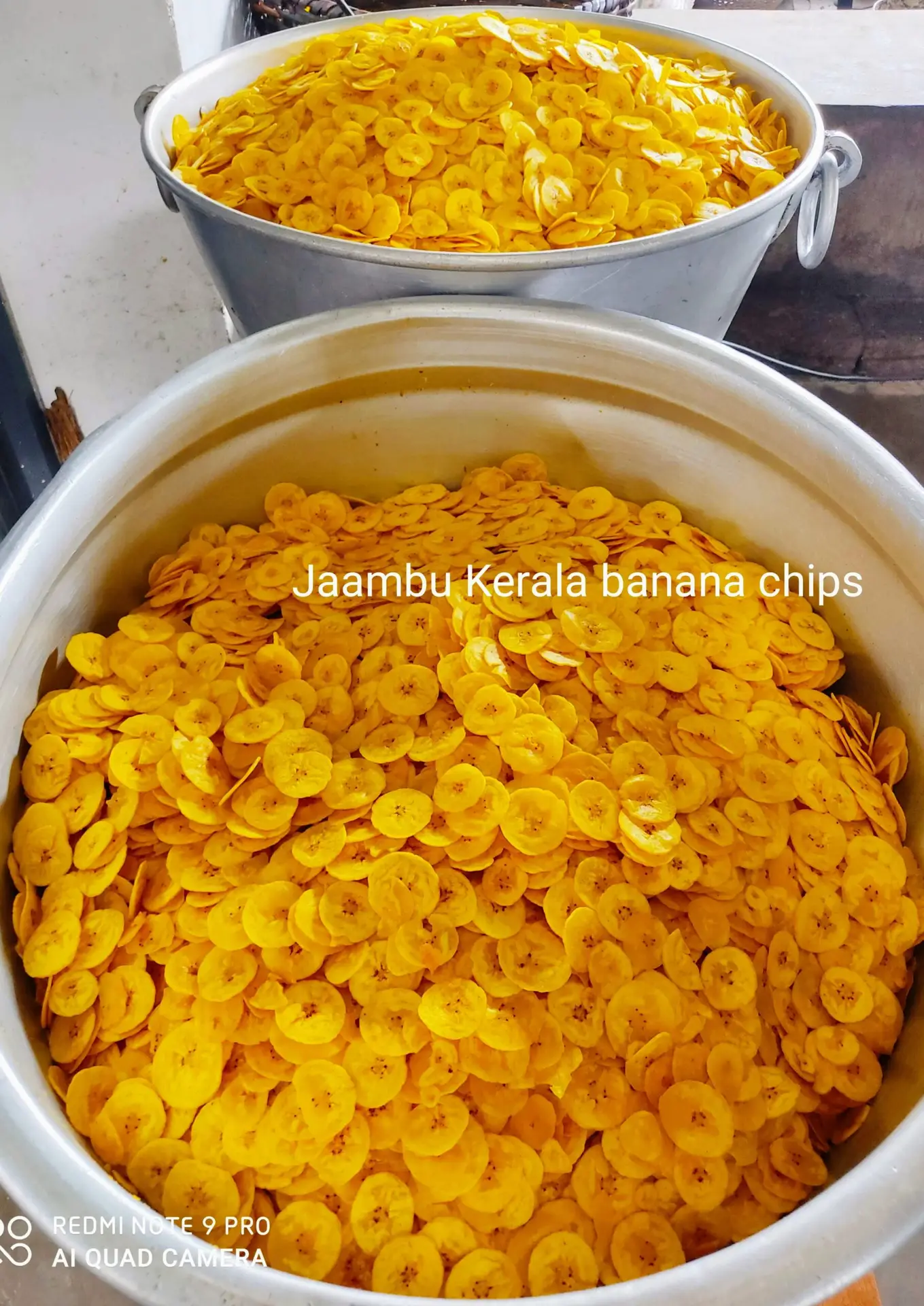
The chips are spread out on large perforated trays to drain any excess oil and cool to room temperature. This cooling phase is vital—it’s when the final “set” happens, turning the chip from hot and flexible to cold and brittle. To preserve that crunch, they must be packed almost immediately into airtight containers.
Why the Traditional Way Wins
The reason small-batch, traditional chips taste better than mass-produced ones comes down to the human element. From selecting the right bunch of Nendran to knowing exactly when the oil is at the right temperature, it’s a craft passed down through generations.
The result isn’t just a snack; it’s a piece of Kerala’s culinary soul.